
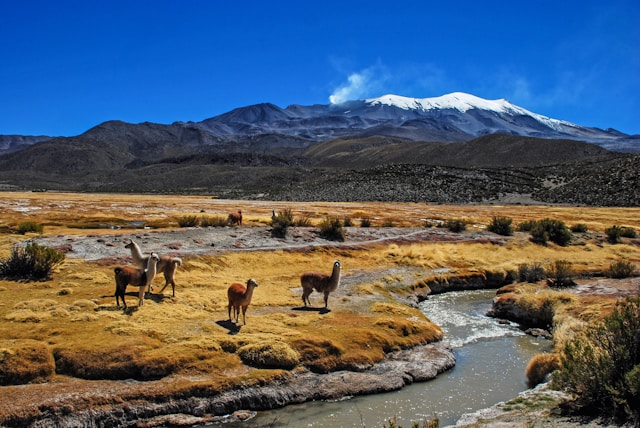
Sajama to Uyuni Tour is one of Bolivia’s most spectacular overland journeys, crossing volcanoes, hot springs, wildlife-filled plains, remote villages, and high-altitude landscapes before reaching the Uyuni Salt Flats.
There are places you visit because they are famous. Then there are places that get under your skin before you even understand why.
The Salar de Uyuni belongs to the first category at first glance. It is immense, white, surreal, the kind of landscape that makes cameras panic and people speak in clichés. It is the largest salt flat in the world, stretching across 10,582 square kilometers of Bolivia’s high Altiplano, a place where the dry season cracks into blinding geometry and the rainy season turns the earth into a mirror of the sky.
But the road there matters.
And if you want to arrive at Uyuni not just impressed, but changed, you take the route through Sajama National Park.
For travelers starting in La Paz, a Sajama to Uyuni Tour offers a richer and more scenic way to reach the Uyuni Salt Flats.
The Bolivia Before the Postcard
Sajama does not perform for you. It does not throw itself at the traveler with neon signs, crowds, or easy drama. It waits. A Sajama to Uyuni Tour is ideal for travelers who want to experience Bolivia beyond the classic salt flats route.
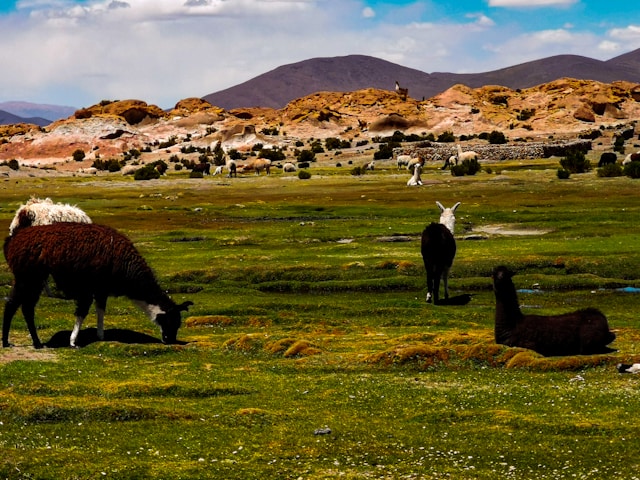
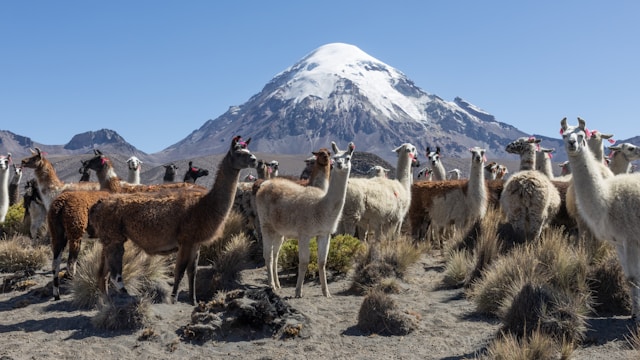
Out in Bolivia’s western highlands, near the Chilean border, Sajama National Park rises from the puna like a forgotten altar. The air is thin. The silence has weight. Llamas and alpacas move through yellow grass. Steam lifts from thermal waters. Volcanoes stand in the distance, white-headed and indifferent.
This is Bolivia before the postcard. Before the salt flat. Before the forced perspective photos and the souvenir stalls. Sajama is where the journey slows down enough for you to actually feel the Altiplano.
Bolivia created Sajama as a natural reserve in 1939, largely to protect the kheñua, or Polylepis tarapacana, trees that grow on the slopes here and are considered among the highest forests in the world. The park is also home to Aymara communities of Caranga origin, whose traditional social structures, customs, and spiritual relationship with the land remain deeply rooted in the area.
That matters. Because Sajama is not empty wilderness. It is inhabited, remembered, worked, prayed over. It is a living landscape.
The beauty of a Sajama to Uyuni Tour is that the journey becomes as memorable as the destination itself.
Meet Nevado Sajama, Bolivia’s Highest Mountain
At the center of it all stands Nevado Sajama.
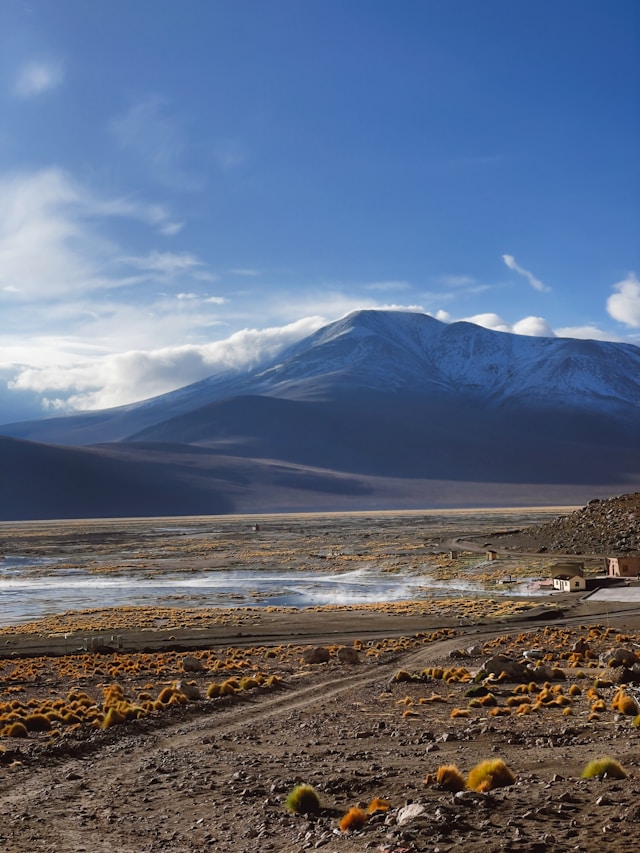
At 6,542 meters, this extinct volcano is Bolivia’s highest peak, a mountain so cleanly drawn against the sky it feels almost unreal. The Global Alliance of National Parks notes that Sajama National Park ranges from 4,200 meters to 6,542 meters in elevation, placing the entire experience deep in high-altitude country.
You do not have to climb Nevado Sajama to understand its power. In fact, most travelers should not. It is enough to wake up beneath it, to watch the first light hit its icy crown, to sit with a hot drink while the village stirs and the mountain remains completely unmoved by human schedules.
This is the kind of place that corrects your pace.
In La Paz, you are still thinking about logistics. In Uyuni, you will be thinking about scale. But in Sajama, you start thinking about presence. The road becomes less about getting somewhere and more about learning how to arrive.
This Sajama to Uyuni Tour connects remote Andean landscapes with one of South America’s most iconic destinations.
Hot Springs, Geysers, and the Altiplano’s Quiet Violence
Sajama looks calm until you remember it was made by fire.
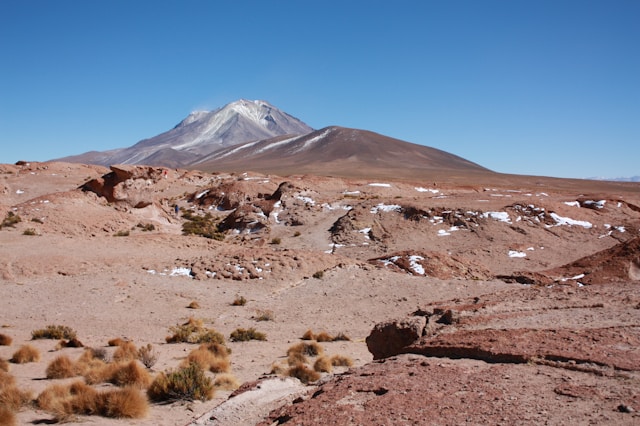
The park is shaped by volcanic activity, with thermal springs and geysers scattered through the landscape. There is something beautifully strange about slipping into hot water while the morning air bites at your face and snow-covered volcanoes watch from the horizon.
The geysers are not polished tourist theater. They bubble, hiss, stain the earth, and remind you that beneath all this silence, the planet is still cooking.
This is why Sajama works so well before Uyuni. The salt flat can feel otherworldly, but Sajama gives you the prologue. It explains the mood of the Altiplano: mineral, ancient, exposed, unsentimental. By the time you reach the Salar, you understand that Bolivia’s beauty is not soft. It is elemental.
Aymara Culture and the Human Side of the Route
A good journey through Bolivia should never be only about landscapes.
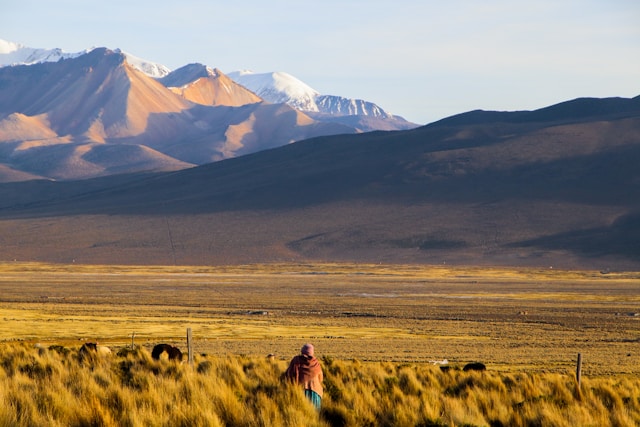
In Sajama, the Aymara presence is not decorative. It is part of daily life: camelid herding, weaving, small villages, circular houses, local rhythms that have survived because they were useful, sacred, and stubborn. UNESCO describes the area as one of the places where traditional indigenous social organization, customs, and mythic-religious beliefs have been strongly preserved.
For travelers, this is where the experience becomes more than scenic.
You stop seeing the Altiplano as “remote” and start seeing it as home. You understand that the llamas crossing the road are not props. The quinoa fields are not aesthetic. The mountains are not just mountains. They belong to a web of stories, responsibilities, and relationships that existed long before tourism arrived with dust on its tires.
There are places you visit because they are famous. Then there are places that get under your skin before you even understand why.
The Salar de Uyuni belongs to the first category at first glance. It is immense, white, surreal, the kind of landscape that makes cameras panic and people speak in clichés. It is the largest salt flat in the world, stretching across 10,582 square kilometers of Bolivia’s high Altiplano, a place where the dry season cracks into blinding geometry and the rainy season turns the earth into a mirror of the sky.
But the road there matters.
And if you want to arrive at Uyuni not just impressed, but changed, you take the route through Sajama National Park.
The Bolivia Before the Postcard
Sajama does not perform for you. It does not throw itself at the traveler with neon signs, crowds, or easy drama. It waits.
Out in Bolivia’s western highlands, near the Chilean border, Sajama National Park rises from the puna like a forgotten altar. The air is thin. The silence has weight. Llamas and alpacas move through yellow grass. Steam lifts from thermal waters. Volcanoes stand in the distance, white-headed and indifferent.
This is Bolivia before the postcard. Before the salt flat. Before the forced perspective photos and the souvenir stalls. Sajama is where the journey slows down enough for you to actually feel the Altiplano.
Bolivia created Sajama as a natural reserve in 1939, largely to protect the kheñua, or Polylepis tarapacana, trees that grow on the slopes here and are considered among the highest forests in the world. The park is also home to Aymara communities of Caranga origin, whose traditional social structures, customs, and spiritual relationship with the land remain deeply rooted in the area.
That matters. Because Sajama is not empty wilderness. It is inhabited, remembered, worked, prayed over. It is a living landscape.
Meet Nevado Sajama, Bolivia’s Highest Mountain
At the center of it all stands Nevado Sajama.
At 6,542 meters, this extinct volcano is Bolivia’s highest peak, a mountain so cleanly drawn against the sky it feels almost unreal. The Global Alliance of National Parks notes that Sajama National Park ranges from 4,200 meters to 6,542 meters in elevation, placing the entire experience deep in high-altitude country.
You do not have to climb Nevado Sajama to understand its power. In fact, most travelers should not. It is enough to wake up beneath it, to watch the first light hit its icy crown, to sit with a hot drink while the village stirs and the mountain remains completely unmoved by human schedules.
This is the kind of place that corrects your pace.
In La Paz, you are still thinking about logistics. In Uyuni, you will be thinking about scale. But in Sajama, you start thinking about presence. The road becomes less about getting somewhere and more about learning how to arrive.
Hot Springs, Geysers, and the Altiplano’s Quiet Violence
Sajama looks calm until you remember it was made by fire.
The park is shaped by volcanic activity, with thermal springs and geysers scattered through the landscape. There is something beautifully strange about slipping into hot water while the morning air bites at your face and snow-covered volcanoes watch from the horizon.
The geysers are not polished tourist theater. They bubble, hiss, stain the earth, and remind you that beneath all this silence, the planet is still cooking.
This is why Sajama works so well before Uyuni. The salt flat can feel otherworldly, but Sajama gives you the prologue. It explains the mood of the Altiplano: mineral, ancient, exposed, unsentimental. By the time you reach the Salar, you understand that Bolivia’s beauty is not soft. It is elemental.
Aymara Culture and the Human Side of the Route
A good journey through Bolivia should never be only about landscapes.
In Sajama, the Aymara presence is not decorative. It is part of daily life: camelid herding, weaving, small villages, circular houses, local rhythms that have survived because they were useful, sacred, and stubborn. UNESCO describes the area as one of the places where traditional indigenous social organization, customs, and mythic-religious beliefs have been strongly preserved.
For travelers, this is where the experience becomes more than scenic.
You stop seeing the Altiplano as “remote” and start seeing it as home. You understand that the llamas crossing the road are not props. The quinoa fields are not aesthetic. The mountains are not just mountains. They belong to a web of stories, responsibilities, and relationships that existed long before tourism arrived with dust on its tires.
This is exactly why Pie Experiences builds journeys around human connection, not just sightseeing. The goal is not to consume Bolivia quickly. The goal is to move through it with respect, curiosity, and enough humility to listen.
Why Take the Sajama Route to the Salar de Uyuni?
Most travelers reach Uyuni by flying in or taking a direct road from La Paz. Efficient? Sure. Memorable? Sometimes. Transformative? Not always.
The Sajama route changes the entire emotional arc of the trip.
Instead of dropping straight into Uyuni, you cross the Altiplano gradually. You acclimatize to the altitude. You watch the landscape shift from volcanic peaks to high plains, from hot springs to salt deserts, from Aymara villages to the vastness of Coipasa and finally Uyuni.
Pie Experiences’ own route begins with Sajama: hot springs at dawn, geysers at sunrise, ancient forests, Aymara villages, and an overnight stay with views of Bolivia’s tallest mountain before continuing across the Salar de Coipasa toward the Salar de Uyuni.
That is not just a route. That is a slow reveal.
The Salar de Uyuni becomes the climax, not the whole story.
Salar de Coipasa: The Forgotten Salt Flat Before Uyuni
One of the great rewards of traveling from Sajama toward Uyuni is the chance to cross or approach the Salar de Coipasa, Uyuni’s lesser-known sibling.
Coipasa does not get the same fame. That is part of its appeal. It feels wilder, emptier, less rehearsed. Depending on conditions, it can offer the strange sensation of moving through a salt landscape before the big arrival at Uyuni — like hearing the first notes of a song before the full orchestra comes in.
For travelers who want the iconic Bolivia experience without following the exact same path as everyone else, this route is gold. It gives you solitude before spectacle. Texture before grandeur.
And then, when Uyuni finally appears, it lands harder.
The Salar de Uyuni Hits Differently After Sajama
Arriving at the Salar de Uyuni after Sajama is not the same as simply arriving.
You have already slept under volcanoes. You have felt the cold of the high plains. You have seen steam rise from the earth. You have passed communities living with altitude, wind, and distance every day. So when the salt flat opens in front of you, you are not just looking for the perfect photo.
You are ready for the scale of it.
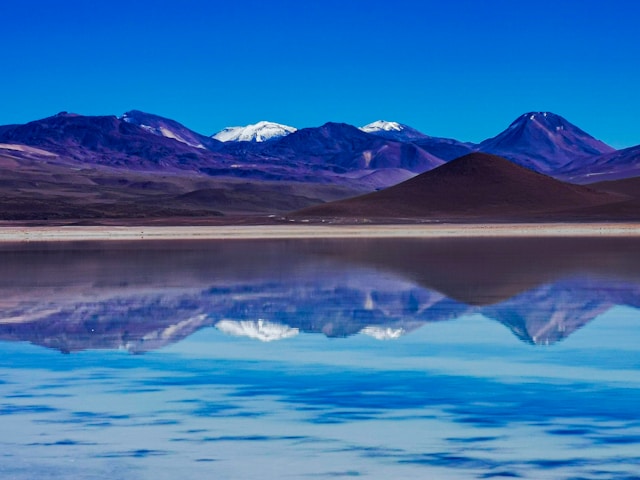
In the rainy season, usually from December into March or early April, water can cover parts of the salar and create the famous mirror effect, though access to some areas may be limited. In the dry season, the hard salt crust allows greater mobility, including visits to islands such as Incahuasi.
Either way, Uyuni is extraordinary. But Sajama teaches you how to receive it.
A Better Route for Sustainable Travel
There is another reason to choose the Sajama route: it spreads the benefits of tourism.
When travelers rush only to the most famous destinations, the pressure piles up in the same places. Roads, waste, water, local services, fragile ecosystems — everything carries the weight. A more thoughtful overland route helps distribute income to smaller communities, local guides, family-run lodges, drivers, cooks, and artisans along the way.
This is where sustainable tourism becomes practical, not just poetic.
It means staying longer. Hiring local expertise. Respecting protected areas. Paying fair prices. Traveling in smaller groups. Letting the journey support the people who make it possible.
It also means understanding that “off the beaten path” is not a trophy. It is a responsibility.
Who Is This Route For?
The Sajama-to-Uyuni route is for travelers who want Bolivia with dust on it.
It is for couples who would rather share a sunrise over geysers than another crowded viewpoint. It is for photographers chasing light that feels prehistoric. It is for families with older kids who want culture, wildlife, and landscapes that open conversations. It is for curious travelers who know that the best part of a trip is often the stretch between the famous places.
It is not for people looking for luxury in the conventional sense. The luxury here is space. Silence. Clean cold air. A mountain outside your window. A guide who knows the story behind the village you just passed.
Practical Notes Before You Go
This is high-altitude travel, so acclimatization matters. Sajama sits above 4,000 meters, and the Salar de Uyuni is around 3,700 meters. Move slowly, hydrate well, avoid overloading your first days, and travel with experienced local operators who understand the route and seasonal conditions.
A private 4×4 is the best way to experience Sajama properly, especially if you want to reach geysers, hot springs, remote viewpoints, and the overland connection toward Coipasa and Uyuni. Pie Experiences notes that public transport can reach Sajama town, but it does not provide access to many of the park’s main attractions.
The best time depends on what you want. Dry season brings clearer access and sharper landscapes. Rainy season can bring the mirror effect in Uyuni, but with more route limitations. Both are beautiful. Neither is predictable. That is part of the deal.
Who Should Choose a Sajama to Uyuni Tour?
A Sajama to Uyuni Tour is ideal for travelers who want to explore Bolivia beyond the classic salt flats itinerary. It is perfect for those looking for a private overland journey from La Paz to Uyuni, with volcanoes, wildlife, hot springs, remote villages, and high-altitude Andean landscapes along the way.
Frequently Asked Questions About the Sajama to Uyuni Tour
Is Sajama National Park worth visiting before Uyuni?
Yes. Sajama National Park is one of Bolivia’s most underrated landscapes, with volcanoes, hot springs, wildlife, traditional villages, and wide open high-altitude scenery. It adds depth and beauty to the journey before reaching the Uyuni Salt Flats.
How do you get from La Paz to Uyuni through Sajama?
The most scenic way is by overland private tour, traveling from La Paz through Sajama National Park and then continuing south toward Uyuni. This route is ideal for travelers who want more than just the salt flats.
How many days do you need for a Sajama to Uyuni Tour?
A Sajama to Uyuni Tour usually takes several days, depending on the route and the stops included. Travelers who want a more immersive Bolivia experience often combine Sajama, remote Andean landscapes, and the Uyuni Salt Flats in one itinerary.
Is a Sajama to Uyuni Tour better than flying directly to Uyuni?
If you want dramatic landscapes, cultural depth, and a more adventurous journey, yes. Flying is faster, but an overland Sajama to Uyuni Tour offers a much richer and more memorable experience.
What can you see on a Sajama to Uyuni Tour?
Depending on the route, travelers may see Sajama National Park, volcanoes, hot springs, wildlife, high-altitude plains, remote villages, lagoons, and finally the Uyuni Salt Flats.
Is the Sajama to Uyuni route suitable for private travel?
Yes. This route works especially well as a private tour, since it allows more flexibility, scenic stops, and a more comfortable pace across remote areas of Bolivia.